
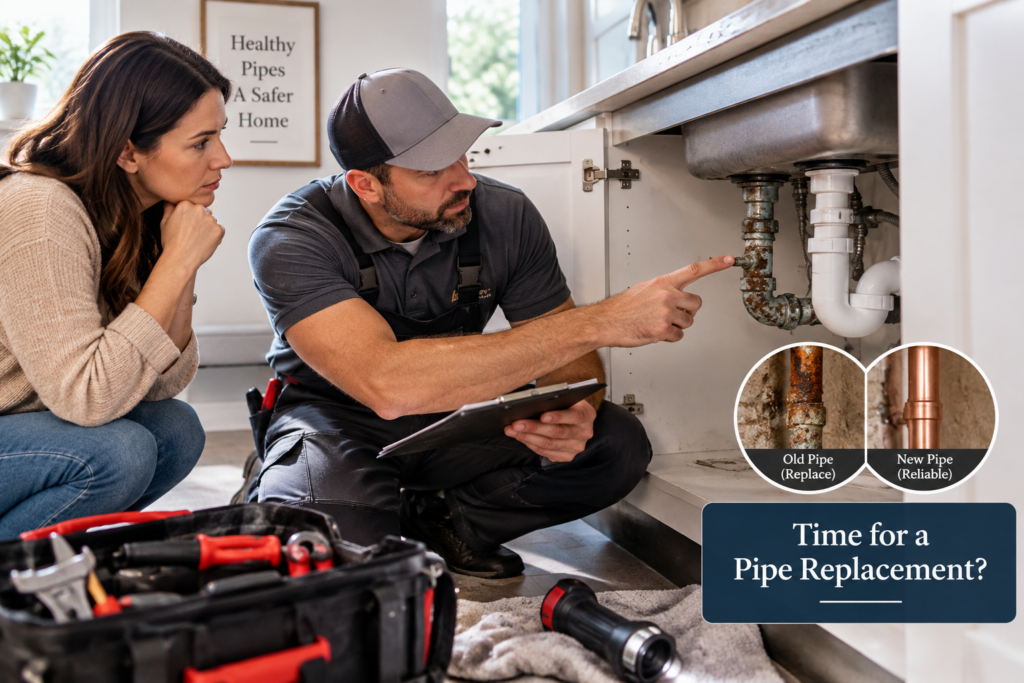
Plumbing problems rarely announce themselves all at once. A slow drip here, a rusty stain there, a little less water pressure than last year, it’s easy to treat each issue as a one-off. But when these signs start piling up, they’re often symptoms of a bigger issue: aging pipes that have reached the end of their usable life.
Knowing when to call a plumber for a quick fix versus when to plan for home pipe replacement can save you from far more expensive damage down the road, burst pipes, water damage, and mold remediation cost far more than a proactive repipe. Here’s how to tell which situation you’re in.
Why Pipes Fail Over Time
Every pipe material eventually wears out, just on different timelines. Metal pipes corrode from the inside as minerals and chemicals in water gradually erode the material. Older materials like galvanized steel were never designed to last as long as modern alternatives. Water pressure, water quality, ground movement, temperature swings, and simple age all contribute to pipes weakening, cracking, or clogging with corrosion buildup. Understanding this is the first step in recognizing why an aging plumbing system eventually needs more than routine repairs.
Signs of Bad Pipes in Your Home
A few warning signs consistently point toward failing pipes rather than a one-off plumbing issue:
Discolored water. Brown, yellow, or rust-colored water, especially right when you turn on a faucet, usually indicates corrosion inside galvanized or older metal pipes.
Low water pressure. A gradual drop in water pressure throughout the house, rather than at just one fixture, often means mineral buildup or corrosion is narrowing the inside of your pipes.
Frequent leaks. One leak is a repair. Leaking pipes that keep appearing in different spots over a short period signal that the entire system is deteriorating, not just one section.
Visible corrosion. Flaking, dimpling, or a greenish/white crust on exposed pipes (common in basements, crawl spaces, or under sinks) is a clear sign of advanced corrosion.
Frequent clogs. Corrosion buildup inside pipes narrows the interior diameter, making clogs more frequent even with normal use.
Water stains or mold. Stains on ceilings, walls, or floors, or a persistent musty smell, often point to a slow leak inside a wall or under a slab that hasn’t been caught yet.
Age of the home. Homes built before the 1970s-80s often still have original galvanized steel or, in some cases, lead pipes. If you don’t know your home’s pipe material and it’s several decades old, it’s worth having a plumber check.
Unusual noises. Banging, rattling, or whistling sounds when water runs can indicate loose, corroded, or deteriorating pipe connections.
Old Plumbing Pipes: How Long Do They Actually Last?
Lifespan varies significantly by material:
- Galvanized steel: 20-50 years (often the shortest-lived common material, especially with hard water)
- PVC: 25-40 years
- PEX: 40-50 years
- Brass: 40-70 years
- Copper: 50-70+ years
- CPVC: 50-75 years
- Cast iron: 75-100 years
Actual lifespan depends on water quality, original installation quality, and how the system has been maintained. A galvanized steel system in a home with hard water might show serious problems well before the 20-year mark, while a well-maintained copper system can outlast several homeowners.
Is It Better to Repair or Replace Old Pipes?
This depends on the scope of the problem. A single leak, one corroded section, or an isolated issue is usually worth repairing, especially if the rest of the plumbing system is younger or in good condition.
Whole house repiping becomes the more sensible option when leaks or corrosion are showing up in multiple locations, the home still has original galvanized or lead pipes, repair costs are starting to add up and recur, or the pipe material itself (not just one section) has reached the end of its expected lifespan. In these cases, continuing to patch individual sections is often a temporary fix that costs more over time than addressing the system as a whole, and it doesn’t remove the ongoing risk of a burst pipe or major leak between repairs.
A licensed plumber can inspect the system (sometimes with a camera scope) and give a straightforward recommendation on whether targeted repair or residential pipe replacement makes more financial and practical sense for your specific home.
How Much Does Home Pipe Replacement Cost?
Whole-house repiping costs vary based on home size, number of bathrooms, and pipe material, but current cost data offers a useful range: a standard 2-3 bedroom home typically costs $4,000 to $15,000, averaging around $8,000.
By material:
- PEX typically runs $4,000-$10,000 for a whole-house repipe (roughly $3-$7 per linear foot installed). It’s the most commonly chosen material today, largely because it costs 30-40% less than copper while still offering a long lifespan.
- Copper typically runs $6,000-$15,000+ (roughly $6-$14 per linear foot installed) and remains a premium option with the longest track record.
By home size (approximate PEX / copper ranges):
- 1 bathroom, under 1,200 sq ft: $2,500-$5,000 / $4,500-$8,000
- 2 bathrooms, 1,200-1,800 sq ft: $4,000-$7,500 / $6,000-$11,000
- 3 bathrooms, 1,800-2,500 sq ft: $6,000-$10,000 / $8,000-$15,000
- 4+ bathrooms, 2,500+ sq ft: $8,000-$14,000 / $12,000-$20,000+
These figures don’t always include drywall repair, which is often a separate line item after pipes are replaced. A written, on-site estimate from a licensed plumber is the most reliable way to know what your specific home will cost.
How Long Does a Whole-House Repiping Project Take?
The core plumbing work for a standard home typically takes 2 to 5 days. Larger homes, more bathrooms, or slab foundations (which sometimes require pipes to be rerouted through walls or ceilings rather than under the slab) can extend that timeline. Drywall repair and patching, which usually follows the plumbing work, adds additional days on top of that before the project is fully finished.
Choosing a Plumber for Pipe Replacement
For a project of this scope, verify that any plumber you’re considering is licensed and insured, ask for references from recent repiping projects, get a written estimate that specifies the pipe material and scope of work, and confirm whether drywall repair is included or handled separately. If you’re located in the Knoxville area, look for a local plumbing contractor experienced with pipe replacement Knoxville homes commonly need, since they’ll be familiar with the area’s typical housing stock, water conditions, and permitting requirements.
Frequently Asked Questions
Q1. What are the signs that home pipes need replacement?
Common signs include discolored water, gradually declining water pressure, frequent or recurring leaks, visible corrosion on exposed pipes, frequent clogs, water stains or musty odors, unusual noises when water runs, and simply having an older home with original galvanized or lead pipes.
Q2. How old can residential plumbing pipes become before replacement?
It depends on material. Galvanized steel typically lasts 20-50 years, PVC 25-40 years, PEX 40-50 years, copper 50-70+ years, and cast iron 75-100 years. Water quality and maintenance history affect where a specific system falls within that range.
Q3. Is it better to repair or replace old pipes?
A single, isolated issue is usually worth repairing. Whole-house repiping makes more sense when problems are showing up in multiple locations, the home still has original galvanized or lead plumbing, or repair costs are recurring and adding up. A plumber’s inspection is the best way to know which situation applies.
Q4. How much does home pipe replacement cost?
Whole-house repiping typically costs $4,000 to $15,000 for a standard home, averaging around $8,000. PEX generally costs 30-40% less than copper. Exact cost depends on home size, number of bathrooms, pipe material, and whether drywall repair is included.
Q5. How long does a whole-house repiping project take?
The plumbing work itself usually takes 2 to 5 days for a standard home. Larger homes or more complex layouts can take longer, and drywall repair afterward typically adds a few more days before the project is complete.